



American homeowners often end up with a hodgepodge of solar lights—security beams too dim, patio lights that blind, or decorations that clash with HOA rules. Toss in misangled solar panels, and you’ve got lights that fizzle out by midnight. This guide breaks down how to choose, place, and tweak solar lights for front-yard security, backyard relaxation, and side-yard gardening, tailored to small (100㎡), medium (200-300㎡), or large (500㎡+) yards. No electrician needed—just a bit of know-how to make your yard shine right.
Picking the Right Lights for Each Yard Zone
Different parts of your yard have different needs. Security calls for bright, no-nonsense beams; leisure spots need cozy vibes; and garden beds want gentle glows that won’t fry plants. Here’s how to match solar lights to each zone, keeping HOA rules and yard size in mind.
- Front Yard (Security Focus):
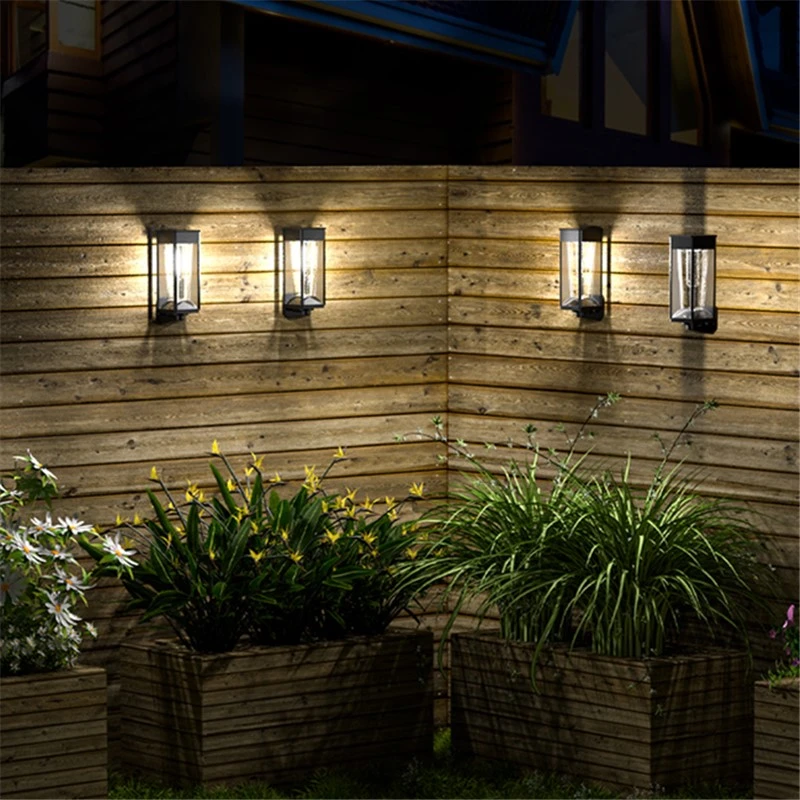
- Small (100㎡): Install two 150-lumen solar wall lights (3m high, 120° angle) on either side of the front gate, plus one 200-lumen floodlight aimed at the driveway (8m motion sensor range).
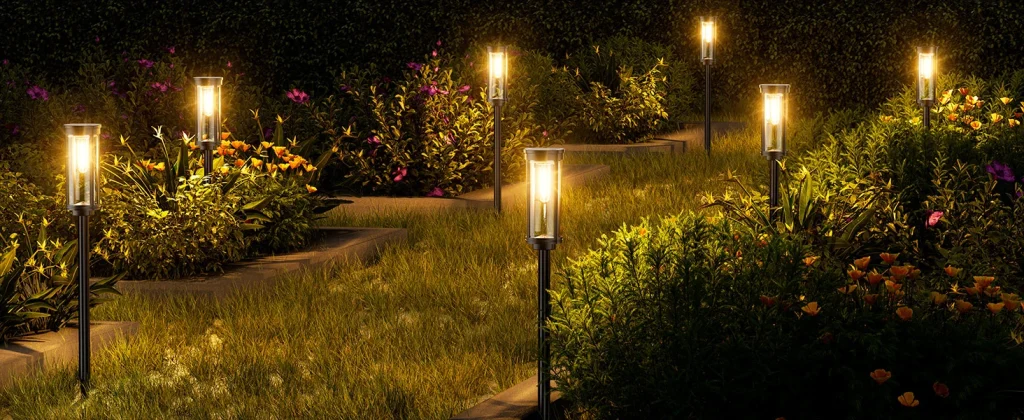
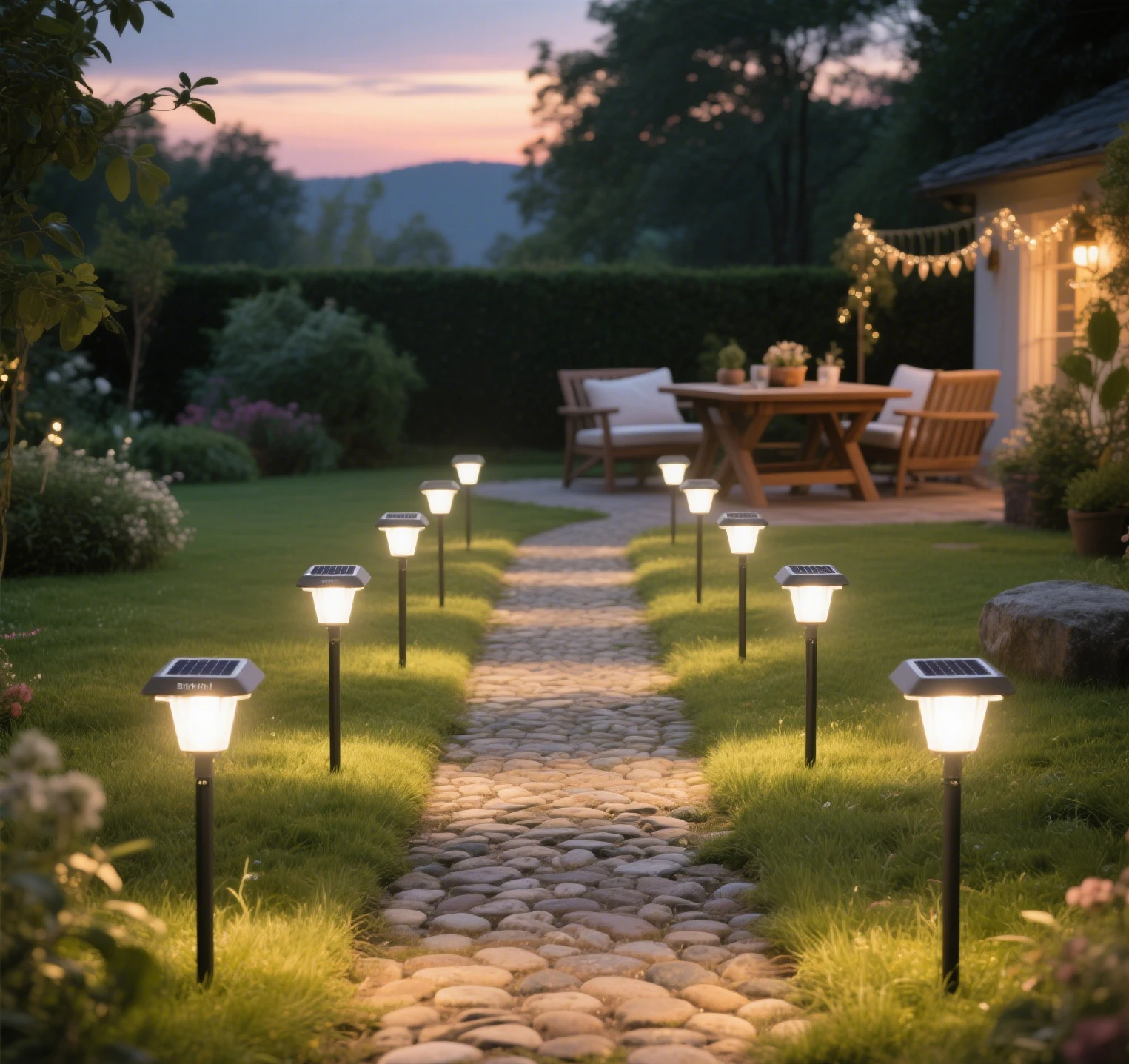
- Medium (300㎡): Add two 80-lumen in-ground lights along the walkway (3m spacing) to meet HOA caps of ≤200 lumens at night.
- Backyard (Leisure Focus):
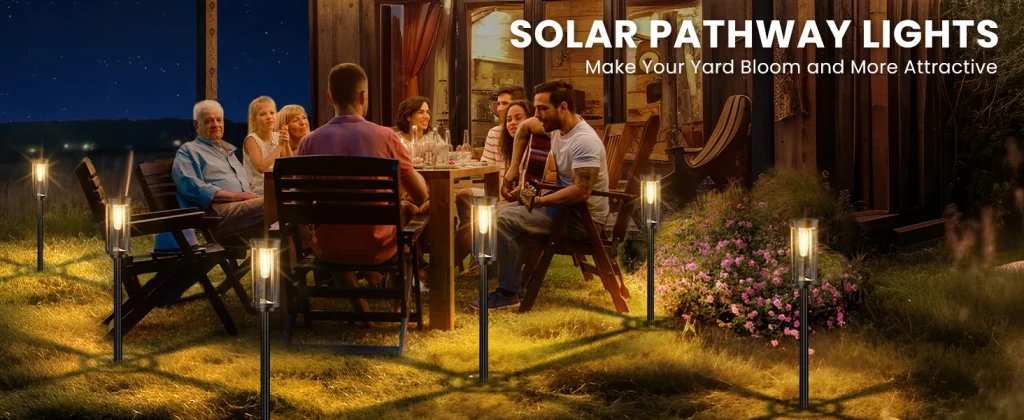
- Small (100㎡): Use one 120-lumen solar post light (2.5m high, 3000K warm tone) near the dining table and a 50-lumen string light wrapped around a pergola.
- Medium (300㎡): Include a 80-lumen portable solar lantern for flexible use (BBQs, games), tilting lamp heads 15° downward to avoid glaring at seated guests.
- Side Yard (Gardening Focus):
- Small (100㎡): Place two 60-lumen solar spotlights on tall crops like tomato trellises (≤80 lumens to avoid leaf burn) and one humidity-sensing night light near a rain barrel to signal watering needs.
- Installation Basics: Keep solar panels shade-free and south-facing (optimal in the Northern Hemisphere). Small yards can share a single ≥10W panel; large yards need one panel per 3-4 lights.
For example, I set up a small yard in Ohio with a single 12W panel powering a mix of wall and string lights—kept it simple and HOA-compliant without breaking the bank.
Getting It Right: Installation, Tuning, and Checks
Slapping up solar lights without planning is a recipe for dim bulbs or waterlogged gear. Here’s a step-by-step to nail the setup, from picking spots to ensuring they work long-term.
- Pre-Installation:
- Use Google Maps to map your yard’s orientation for max sunlight.
- Check lamp posts with a level to avoid tilting (tilted posts let water seep in).
- Bury in-ground lights 10cm deep to protect against frost or foot traffic.
- Tuning the System:
- Set solar panel angles based on latitude: 30°-40° in California (32°-42°N), 40°-50° in Minnesota (43°-49°N) for optimal sun capture.
- Test light modes via the controller: “light control” (auto on at dusk, off at dawn) and “motion sensing” (30-second delay after movement).
- Verification Steps:
- Monitor light duration for three days: ≥8 hours on sunny days, ≥4 hours on cloudy ones.
- Ensure security lights cover all angles (no blind spots), leisure lights don’t glare (no visible bulbs from seats), and garden lights don’t hit plant leaves directly.
- Maintenance Plan:
- Wipe solar panels weekly with a soft cloth; in dusty areas like California, clean monthly to clear sand buildup.
- Check battery life every two years—replace if runtime drops below 4 hours.
A buddy in Texas learned the hard way when his unangled panels barely charged in winter. After tweaking to 35°, his lights stayed on past midnight.
Avoiding Common Pitfalls
It’s easy to mess this up if you’re just eyeing lumens or slapping panels anywhere. Here’s what to watch out for:
- HOA Compliance: Many U.S. neighborhoods cap brightness (e.g., ≤200 lumens). Check rules before buying to avoid fines or forced removals.
- Panel Placement: Shadows from trees or buildings can cut charging by 50%. South-facing panels are non-negotiable in the U.S. for max sun.
- Overbuying Brightness: High-lumen lights sound great but drain batteries fast. A 150-lumen wall light often outlasts a 500-lumen one for security.
X posts from homeowners often mention redoing setups after ignoring HOA caps or shading issues—save the hassle by planning ahead.
Shopping Smart for Your Yard
When picking solar lights, match specs to your yard’s size and zone needs. For small yards, brands like Bitpott offer compact 150-lumen wall lights with 2000mAh batteries, perfect for security without overwhelming. Medium yards might add URPOWER’s 80-lumen in-ground lights for walkways. Large yards? Go for high-capacity sets like Brightech’s 3000mAh string lights or Ring’s motion-sensing floods. Check Amazon reviews for real-world runtime data, and search X for “solar yard lighting” to see what locals recommend for your climate. Always verify IP65+ waterproofing and ENERGY STAR certification for efficiency.
Wrapping Up: Light Your Yard Your Way
With this guide, you can skip the electrician and set up solar lights that work for your front yard’s security, backyard’s chill vibes, and side yard’s plants—all while staying HOA-friendly. Measure your space, angle those panels right, and test for performance. Whether your yard’s a cozy 100㎡ or a sprawling 500㎡, the right layout means no dark corners, no glaring bulbs, and no wasted money. You’ll end up with a yard that’s functional, inviting, and perfectly lit, no matter the season.
Leave a Reply