



It’s late at night, and your outdoor security camera captures a blurry shadow moving across your yard. Was it an intruder, an animal, or just the wind? Without clear footage, it’s impossible to tell, leaving you frustrated and uneasy. For North American homeowners—whether living alone or protecting valuable yard assets like sheds or pergolas—nighttime surveillance often falls short due to poor lighting. The solution? Solar light camera integration. By pairing courtyard security solar lights with cameras, you can ensure motion triggers bright illumination, making footage crystal clear and threats easy to identify.
This guide is for homeowners focused on home safety. We’ll explore how solar light camera integration solves nighttime monitoring issues, detail specific lighting setups, offer technical and maintenance tips, and adapt solutions to regional climates. Let’s make your yard secure, day or night.
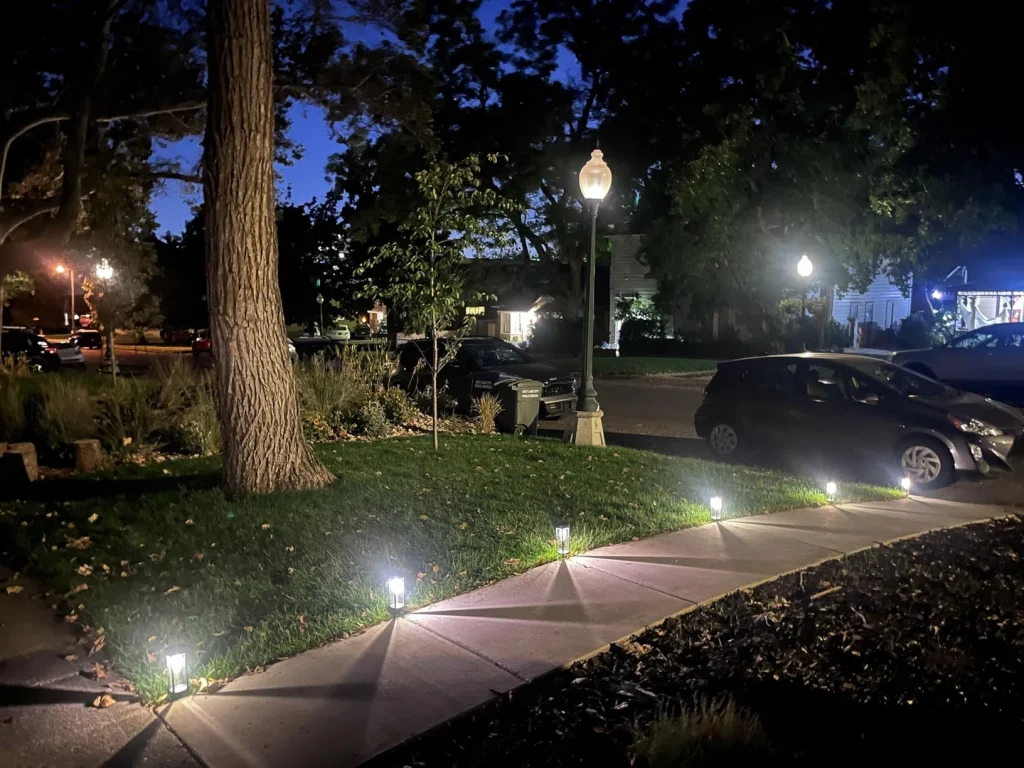
Why Integrate Solar Lights with Security Cameras?
Outdoor security cameras are only as good as the light they work with. At night, low visibility leads to blurry monitoring and untraceable incidents. Pairing cameras with courtyard security solar lights addresses these pain points:
- Enhanced clarity: Bright lights ensure cameras capture sharp, identifiable footage.
- Motion-triggered safety: Lights activate only when needed, deterring intruders and saving energy.
- Eco-friendly security: Solar lights reduce energy costs and align with sustainable living.
- Simple setup: Most systems connect via Bluetooth or apps, requiring no wiring.
Here’s how to choose and position solar lights to work seamlessly with your cameras, tailored to key areas of your property.
Lighting Solutions for Camera Integration
Different areas of your yard—entry points, pathways, or valuable assets—require specific lighting to enhance camera performance. Below are tailored solutions for each, ensuring motion detection triggers bright, effective illumination.
1. Entry Points (Gates/Fences): High-Brightness Floodlights
Gates and fences are common entry points for intruders, but cameras often struggle to capture clear footage in the dark. High-brightness solar floodlights solve this.
- Features:
- 500 lumens, cool white (5000K) for maximum clarity.
- Co-axial alignment with cameras to illuminate ≥5 square meters.
- 3-second burst mode for instant, high-intensity light.
- Why it works: Bright, focused light ensures cameras capture clear faces or details, deterring trespassers.
- Placement: Mount above gates or fences, aligned with camera lenses for optimal coverage.
- Example: A 500-lumen floodlight triggers when motion is detected at your front gate, lighting up 5 square meters for 3 seconds, giving your camera clear footage of any visitor.
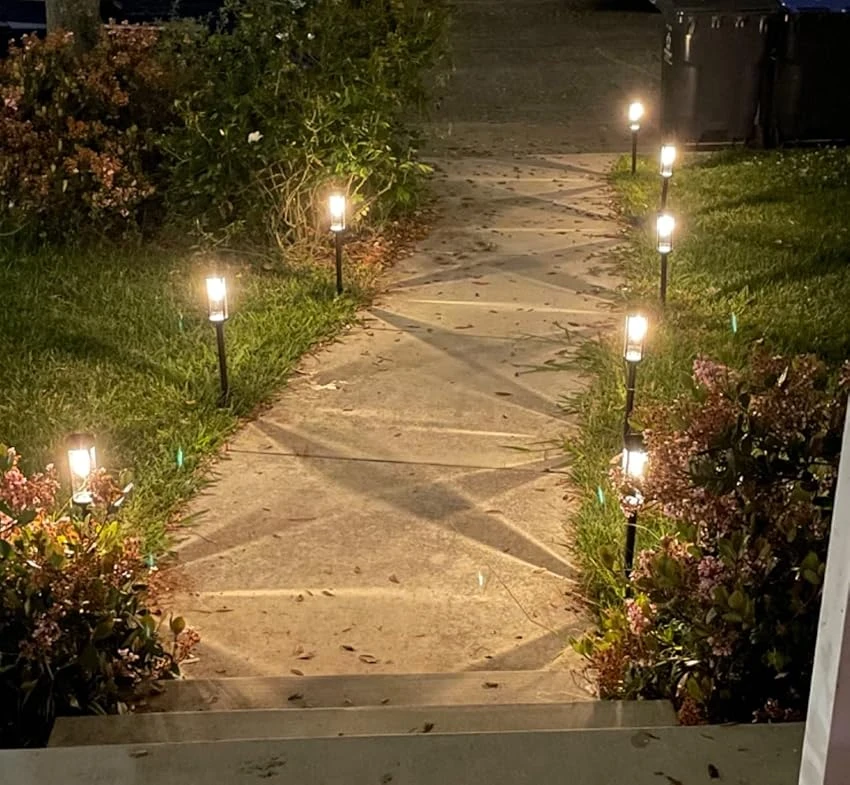
2. Pathways: Motion-Sensing Path Lights
Pathways around your home are prime areas for monitoring movement, but dim lighting can obscure details. Motion-sensing solar path lights ensure clear footage.
- Features:
- 200 lumens, warm white (3000K) for balanced visibility.
- Motion-activated to sync with camera recording (lights on when people walk by).
- Illuminates 2–3 meters of path for 1–5 minutes, adjustable via app.
- Why it works: Lights activate only during movement, syncing with cameras to capture high-definition footage without wasting energy.
- Placement: Stake along walkways or driveways, spaced 2–3 meters apart, within camera fields of view.
- Example: As someone walks down your driveway, 200-lumen path lights activate for 2 minutes, allowing your camera to record a clear, well-lit video.
3. Valuable Assets (Sheds, Pergolas): Mini Linked Lights
Expensive yard features like sheds, grills, or pergolas need protection, but constant lighting can attract attention. Mini solar lights with warning flash modes offer discreet security.
- Features:
- 150 lumens, cool white (4000K) for clear visibility.
- Flash mode activates when motion is detected within 1–2 meters, signaling a warning.
- Compact design for unobtrusive placement near assets.
- Why it works: Flashing lights deter intruders while providing enough light for cameras to capture details.
- Placement: Attach to or near assets, within 1–2 meters of cameras.
- Example: A 150-lumen mini light near your shed flashes when someone approaches, alerting you and providing clear footage for your nearby camera.
Technical Details for Seamless Integration
To make solar light camera integration effective, focus on these technical aspects to ensure lights and cameras work in harmony:
- Choose Bluetooth or app-linked lights: Select systems that sync with cameras via Bluetooth or a mobile app, allowing you to adjust settings like brightness or timing.
- Set motion sensitivity: Configure lights to ignore small animals (e.g., pets or squirrels) by setting a weight threshold (typically >20 kg) to avoid false triggers.
- Adjust light duration: Set lights to stay on for 1–5 minutes after motion detection, balancing security needs with battery life.
- Anti-glare design: Use lights with diffusers or angled beams to prevent glare from hitting camera lenses, ensuring clear footage.
These settings ensure your courtyard security solar lights activate precisely when needed, enhancing camera performance without wasting energy.
Climate Adaptations for Reliable Performance
North America’s varied climates—from freezing Northern winters to humid Southern summers—demand durable, weather-resistant lights. Here’s how to adapt your solar light camera integration setup:
Northern Climates (e.g., Midwest, Northeast, Canada)
Cold temperatures and snow can reduce light and camera efficiency.
- Freeze-resistant lights: Choose lights rated for -30°C operation, with sealed batteries to prevent cold-related damage.
- Snow-proof placement: Mount floodlights or mini lights under eaves or angled surfaces to avoid snow buildup on solar panels.
- Winter battery care: Check battery charge in fall, as cold drains power faster. Replace weak batteries before winter.
Southern Climates (e.g., Southeast, Southwest)
Heat, humidity, and rain require robust, UV-resistant designs.
- UV-resistant coatings: Select lights with UV-protected housings to prevent fading or cracking under intense sun.
- Waterproofing: Ensure lights have an IP65 or higher rating to withstand heavy rain or humidity.
- Regular cleaning: Wipe solar panels monthly to remove dust or pollen, maintaining charging efficiency in humid conditions.
After extreme weather (blizzards or hurricanes), inspect lights and cameras for loose mounts or debris to ensure uninterrupted operation.
Maintenance Tips for Long-Term Reliability
To keep your courtyard security solar lights and cameras working seamlessly, regular upkeep is key:
- Clean solar panels: Wipe panels every 2–3 months with a damp cloth to remove dirt, ensuring optimal charging.
- Check connections: Verify Bluetooth or app pairings monthly to ensure lights and cameras sync correctly.
- Inspect for damage: Look for cracks in light housings or camera lenses after storms, replacing damaged units promptly.
- Test motion detection: Walk through monitored areas quarterly to confirm lights trigger as expected and cameras record clear footage.
Spending 10–15 minutes on maintenance every few months ensures your system remains reliable, keeping your home secure year-round.
Sample Setup: Securing a Typical Yard
Here’s a practical solar light camera integration plan for a North American home with a front gate, driveway, and valuable backyard shed:
- Front gate:
- 1 solar floodlight: 500 lumens, cool white, co-axial with a 1080p camera, 3-second burst mode.
- Setup: Mount above gate, aligned with camera to light 5 square meters.
- Driveway:
- 4 motion-sensing path lights: 200 lumens, warm white, spaced 2 meters apart, synced with a wide-angle camera.
- Setup: Stake along path, set to 2-minute illumination on motion.
- Backyard shed:
- 2 mini linked lights: 150 lumens, flash mode, placed 1 meter from a camera.
- Setup: Attach to shed corners, set to flash on close proximity.
Total cost: $100–$200 for lights and a compatible camera system, available at hardware stores or online.
Installation time: 2–3 hours, no wiring needed.
Result: A secure yard with motion-triggered lights that enhance camera clarity, deterring threats and providing clear footage.
Environmental and Security Benefits
Integrating courtyard security solar lights with cameras boosts safety and sustainability:
- Improved security: Motion-triggered lights ensure cameras capture clear footage, making it easier to identify intruders or incidents.
- Energy savings: Solar lights save ~50–80 kWh annually for a set of 5–10 lights, reducing energy bills.
- Cost efficiency: No wiring or electrician fees save $150–$300 compared to wired systems.
- Eco-impact: Reduced energy use cuts your carbon footprint by ~80–120 kg of CO2 per year, equivalent to driving 200–300 fewer miles.
These benefits make solar light camera integration a smart, green choice for home security.
Getting Started: A Step-by-Step Plan
Ready to secure your yard with courtyard security solar lights and cameras? Follow these steps:
- Assess your property: Identify key areas—gates, paths, or assets like sheds—for monitoring and lighting.
- Select your lights:
- Gates: 500-lumen floodlights, co-axial with cameras.
- Paths: 200-lumen motion-sensing lights, app-linked.
- Assets: 150-lumen mini lights with flash mode.
- Install strategically:
- Place solar panels for 4–6 hours of daily sunlight.
- Align lights with camera fields of view, avoiding glare.
- Test motion detection and app settings post-installation.
- Maintain regularly: Clean panels, check connections, and test triggers.
- Monitor performance: Review camera footage to ensure lights enhance clarity.
Most systems are “plug-and-play,” installable in an afternoon. Look for Bluetooth or app-compatible models with strong reviews.
Conclusion: Precision Lighting for Smarter Security
Nighttime security shouldn’t be a guessing game with blurry monitoring or untraceable incidents. With solar light camera integration, your courtyard security solar lights work in sync with cameras to illuminate threats precisely when needed. From high-brightness floodlights at gates to flashing mini lights near valuable assets, these solutions ensure clear footage and deter intruders. Easy to install, climate-adapted, and eco-friendly, this system keeps your home safe year-round.
No more squinting at grainy footage. With solar light camera integration, your security lights shine when it matters most, making your surveillance sharper and your home safer.
Leave a Reply