


It’s a crisp autumn evening, and you’ve just strung up vibrant, multicolored solar string lights across your backyard fence, envisioning a cozy, festive vibe. Then, a polite but firm email from your Homeowners Association (HOA) lands in your inbox: the bright, colorful lights violate community guidelines. For many North American homeowners, this scenario is all too familiar. HOA rules often impose strict limits on lighting brightness, color, and height, clashing with the desire to create a personalized, stylish backyard. But with solar wall lights, fence lights, and carefully chosen string lights, you can craft a backyard that’s both HOA-compliant and uniquely yours, blending practicality with personality.
-1-1024x400.webp)
This guide is written for North American community residents who want to navigate HOA restrictions without sacrificing style. We’ll break down key compliance rules, share creative ways to add flair using material matching, and provide a real-world example of a compliant yet stunning backyard transformation. With clear parameters and practical tips, you’ll learn how to create a backyard that feels like an extension of your personality while staying within HOA boundaries.
The Challenge: Balancing HOA Rules with Personal Style
HOA guidelines are designed to maintain a cohesive community aesthetic, but they can feel restrictive when you’re trying to make your backyard your own. Common rules limit brightness to avoid glare, restrict colors to neutral tones, and cap fixture heights to keep sightlines clean. The good news? Solar wall lights, fence lights, and low-brightness string lights offer flexible, eco-friendly solutions that meet these standards while allowing you to express your style. Solar lighting eliminates wiring hassles and reduces energy costs, making it ideal for HOA-compliant setups that don’t skimp on charm. Let’s dive into how to achieve this balance with clear guidelines and creative design.
Understanding HOA Lighting Compliance
To create a backyard that passes HOA scrutiny, you need to know the typical restrictions. While rules vary by community, most HOAs in North America share similar standards for outdoor lighting. Here’s a concise table of common parameters to guide your setup:
| Aspect | HOA Requirement | Recommended Solution |
|---|---|---|
| Brightness | ≤200 lumens to prevent glare-free lighting | Use solar wall lights (150 lumens) and fence lights (100-150 lumens). |
| Color | Warm white (2700-3000K) or natural white (4000K) | Choose warm or natural white LEDs for a cohesive look. |
| Height Limits | Fence lights ≤1.8m (6 ft); wall lights ≤2.2m (7 ft) | Install fence lights at 1.5m and wall lights at 2m. |
| Placement | No lights obstructing shared views or neighbor privacy | Position lights on private fences or walls, avoiding property lines. |
Compliance Tips
- Check Your HOA Guidelines: Review your community’s specific rules before purchasing lights. Some HOAs may allow slightly higher lumens (e.g., 250) for pathways but require pre-approval for decorative setups.
- Opt for Dusk-to-Dawn Sensors: Solar wall lights and fence lights with automatic sensors ensure lights only activate at night, reducing neighbor complaints about glare-free performance.
- Document Your Setup: Take photos of your lighting plan to share with your HOA if questions arise, showing adherence to height restrictions and brightness limits.
By sticking to these parameters, you’ll avoid HOA reminders while setting the stage for a stylish, personalized backyard.
Designing a Stylish, HOA-Compliant Backyard
Meeting HOA standards doesn’t mean settling for a cookie-cutter look. By combining solar wall lights, fence lights, and low-brightness solar string lights, you can create a layered, visually appealing backyard that reflects your style. The key is material matching—pairing light fixtures with your backyard’s existing elements (like fences or porches) to create a cohesive, polished aesthetic. Below are three design strategies to achieve this balance.
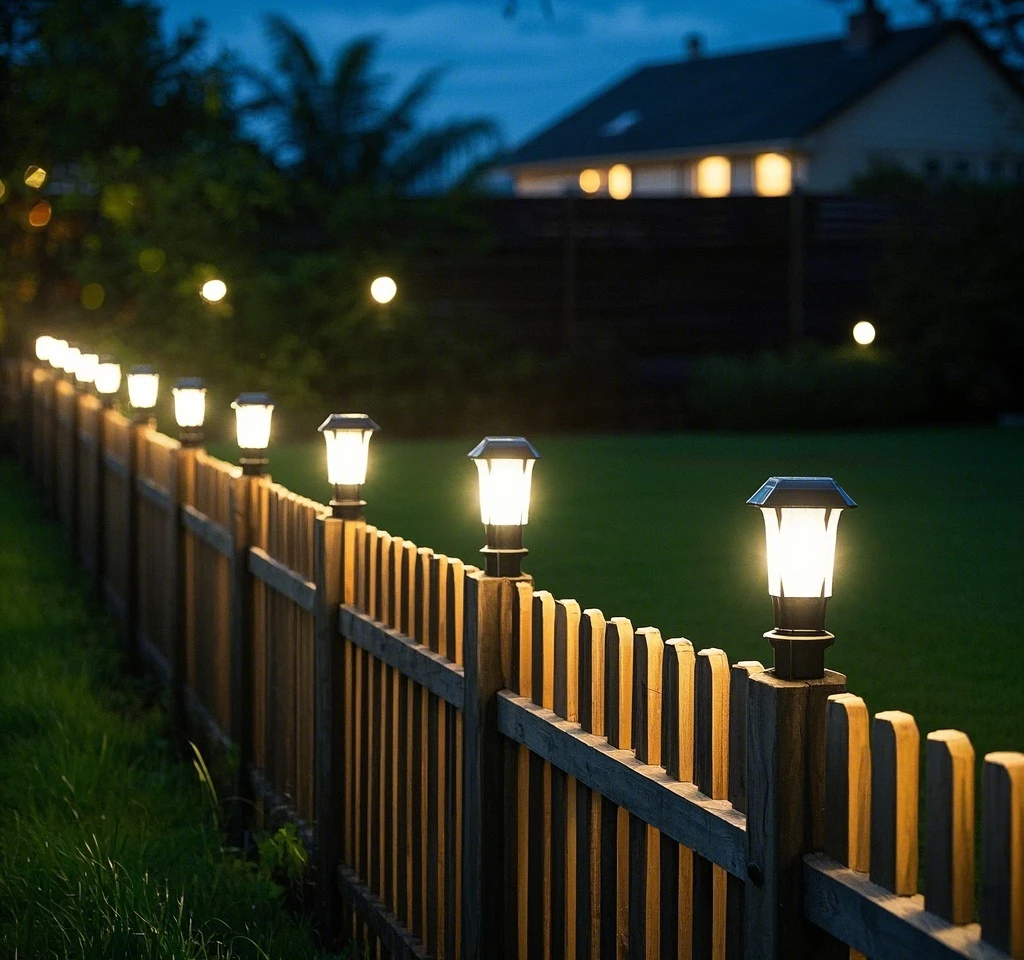
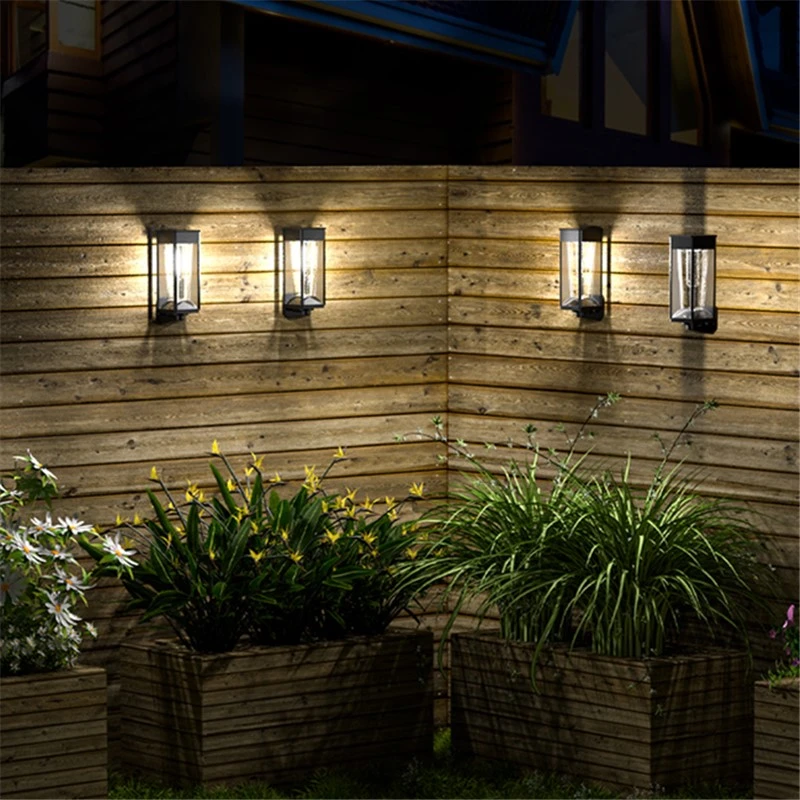
1. Wooden Fences with Wood-Base Fence Lights
- Setup: Install fence lights with wooden or faux-wood bases along wooden fences, keeping them at 1.5 meters (5 feet) to comply with height restrictions. Choose 100-150 lumen lights in warm white (2700K) for a soft, inviting glow that highlights the wood’s natural grain.
- Style Tip: Match the wood tone of the lights to your fence (e.g., cedar, oak, or pine) for a seamless look. For example, a cedar fence pairs beautifully with fence lights in a matching reddish-brown finish.
- Practicality: Use solar fence lights with IP65 waterproof ratings to withstand rain and sprinklers, ensuring durability in North American climates.
2. Metal Porches with Matte Black Solar Wall Lights
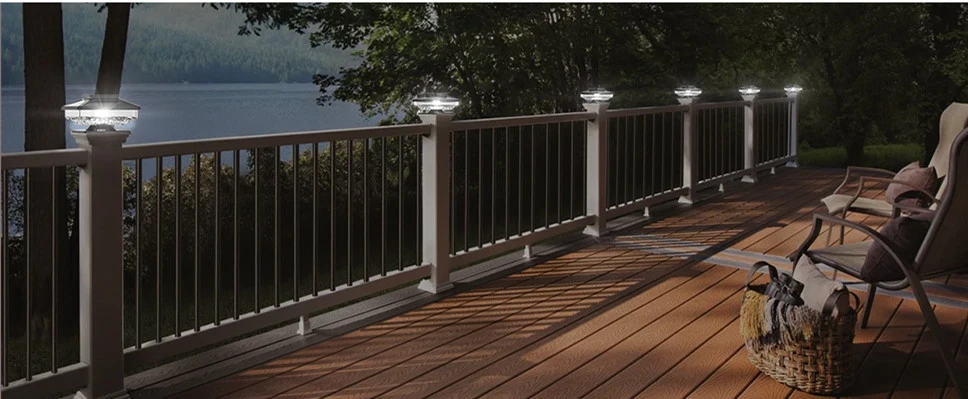
- Setup: Mount solar wall lights (150 lumens, 3000K warm white) on metal porch frames or exterior walls at 2 meters (6.5 feet), just under the 2.2-meter height restriction. Matte black or brushed nickel finishes complement modern or industrial-style porches, adding sophistication without breaking rules.
- Style Tip: Pair these lights with sleek, metallic outdoor furniture or planters to enhance the modern aesthetic. The glare-free light softens the metal’s starkness, creating a welcoming vibe.
- Practicality: Choose solar wall lights with adjustable angles to direct light downward, ensuring HOA-compliant illumination that doesn’t spill into neighbors’ yards.
3. Layered Lighting with Low-Brightness String Lights and Mini Pathway Lights
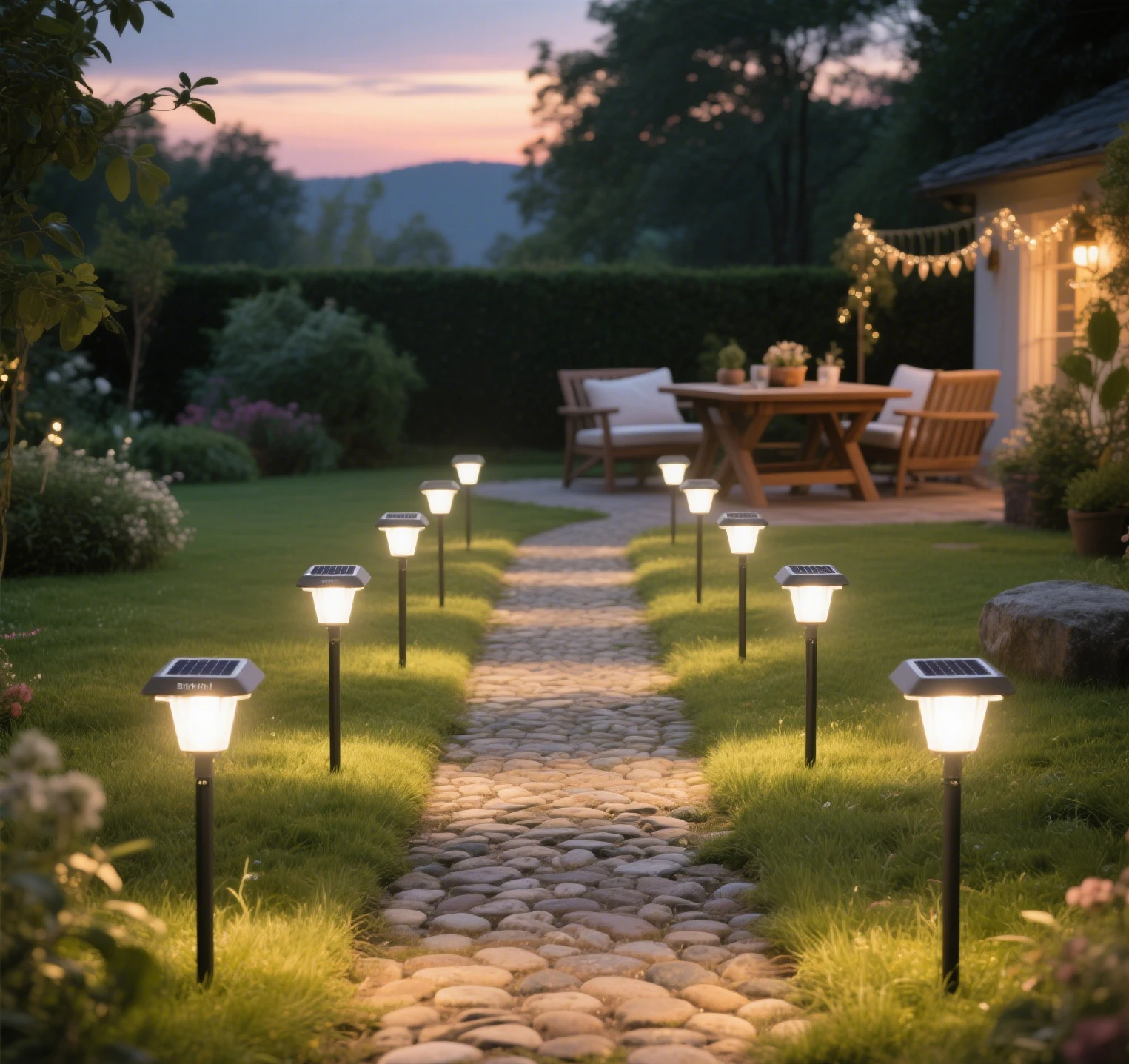
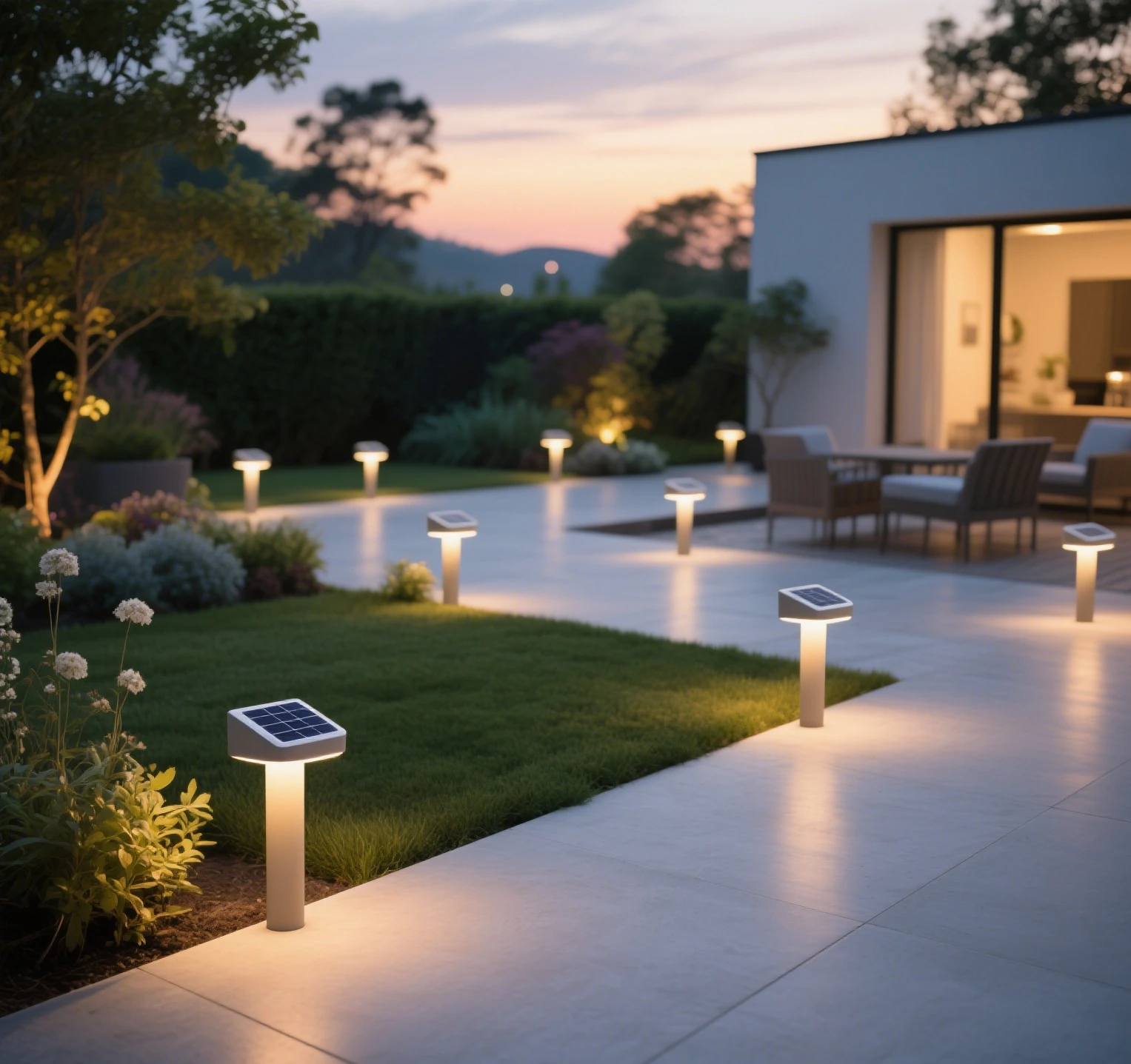
- Setup: Drape solar string lights (50-100 lumens, 2700K) along pergolas or trellises, keeping bulb spacing at 20cm (8 inches) for a subtle, twinkling effect. Add mini solar pathway lights (50 lumens, ≤30cm/12 inches high) along walkways to define edges without exceeding brightness limits.
- Style Tip: Combine these with solar wall lights and fence lights for a layered look—string lights add ambiance, wall lights provide focal points, and pathway lights ensure safety. Use clear or frosted bulbs for a classic, non-intrusive glow.
- Practicality: Select string lights with UV-resistant coatings to prevent fading, and ensure pathway lights have glare-free lenses to meet HOA standards.
Material Matching Formula
To create a cohesive, stylish look, follow this simple formula:
- Wooden Elements (Fences, Decks): Pair with wood-base or faux-wood fence lights in matching tones (e.g., oak with oak, pine with pine).
- Metal or Modern Structures (Porches, Gates): Use matte black or brushed metal solar wall lights for a sleek, contemporary vibe.
- Mixed Materials (Wood + Metal): Combine warm white solar string lights with mini solar pathway lights in neutral finishes (e.g., bronze or black) to tie everything together.
This approach ensures your backyard feels personalized while staying HOA-compliant.
Real-World Example: A Compliant Backyard Transformation
Meet the Thompsons, a family in a North Carolina HOA community. Their initial backyard setup included bright, colorful solar string lights (300 lumens) and tall, mismatched lanterns, which triggered an HOA warning for excessive brightness and non-compliant colors. Determined to keep their backyard inviting, they redesigned it with compliance in mind. They installed 150-lumen solar wall lights in matte black on their metal porch frame at 2 meters high, paired with 100-lumen fence lights in a cedar finish along their wooden fence at 1.5 meters. For ambiance, they added 50-lumen solar string lights in warm white across a pergola and mini solar pathway lights (50 lumens) along their garden path. The result? A cohesive, stylish backyard that passed HOA inspection and felt uniquely theirs, with soft, glare-free lighting perfect for evening barbecues or quiet nights under the stars.
Before, their backyard felt chaotic and drew complaints; after, it became a neighborhood favorite, proving that HOA-compliant lighting can still shine with personality.
Practical Tips for HOA-Compliant, Stylish Lighting
To create a backyard that’s both HOA-compliant and stylish, follow these practical tips:
- Know Your Limits: Stick to ≤200 lumens for all lights, using 150-lumen solar wall lights and 100-150-lumen fence lights to stay glare-free. Always check your HOA’s specific rules.
- Choose Neutral Tones: Opt for warm white (2700-3000K) or natural white (4000K) to meet color restrictions while creating a cozy, inviting atmosphere.
- Mind the Height: Keep fence lights at or below 1.8 meters (6 feet) and solar wall lights at or below 2.2 meters (7 feet) to comply with height restrictions.
- Match Materials: Use the material matching formula to align light finishes with your backyard’s existing elements, creating a polished look.
- Start Small, Scale Up: Begin with one set of solar wall lights or fence lights, then add solar string lights or pathway lights over time to spread costs.
- Maintain Durability: Choose lights with IP65 waterproof ratings and UV-resistant coatings to withstand North American weather, from humid summers to snowy winters.
- Test Placement: Before permanent installation, temporarily set up lights to ensure they meet HOA standards and don’t disturb neighbors, adjusting angles for glare-free performance.
Bringing It All Together
Navigating HOA restrictions doesn’t mean sacrificing your backyard’s personality. With solar wall lights, fence lights, and low-brightness solar string lights, you can create a space that’s both HOA-compliant and uniquely yours. By adhering to brightness limits (≤200 lumens), using warm or natural white tones, and respecting height restrictions, you’ll avoid those dreaded HOA emails while crafting a backyard that feels like home. The material matching formula—pairing wood with wood, metal with metal, and layering lights for depth—ensures your setup is stylish and cohesive.
Like the Thompsons, you can transform your backyard into a welcoming oasis that balances compliance with creativity. Whether it’s a warm glow from solar wall lights on your porch or a subtle twinkle from solar string lights on a pergola, these fixtures prove that HOA-compliant lighting can be anything but boring. So, grab a notebook, sketch your dream backyard, and let solar fence lights and wall lights bring your vision to life—without stepping over the line.
Leave a Reply