


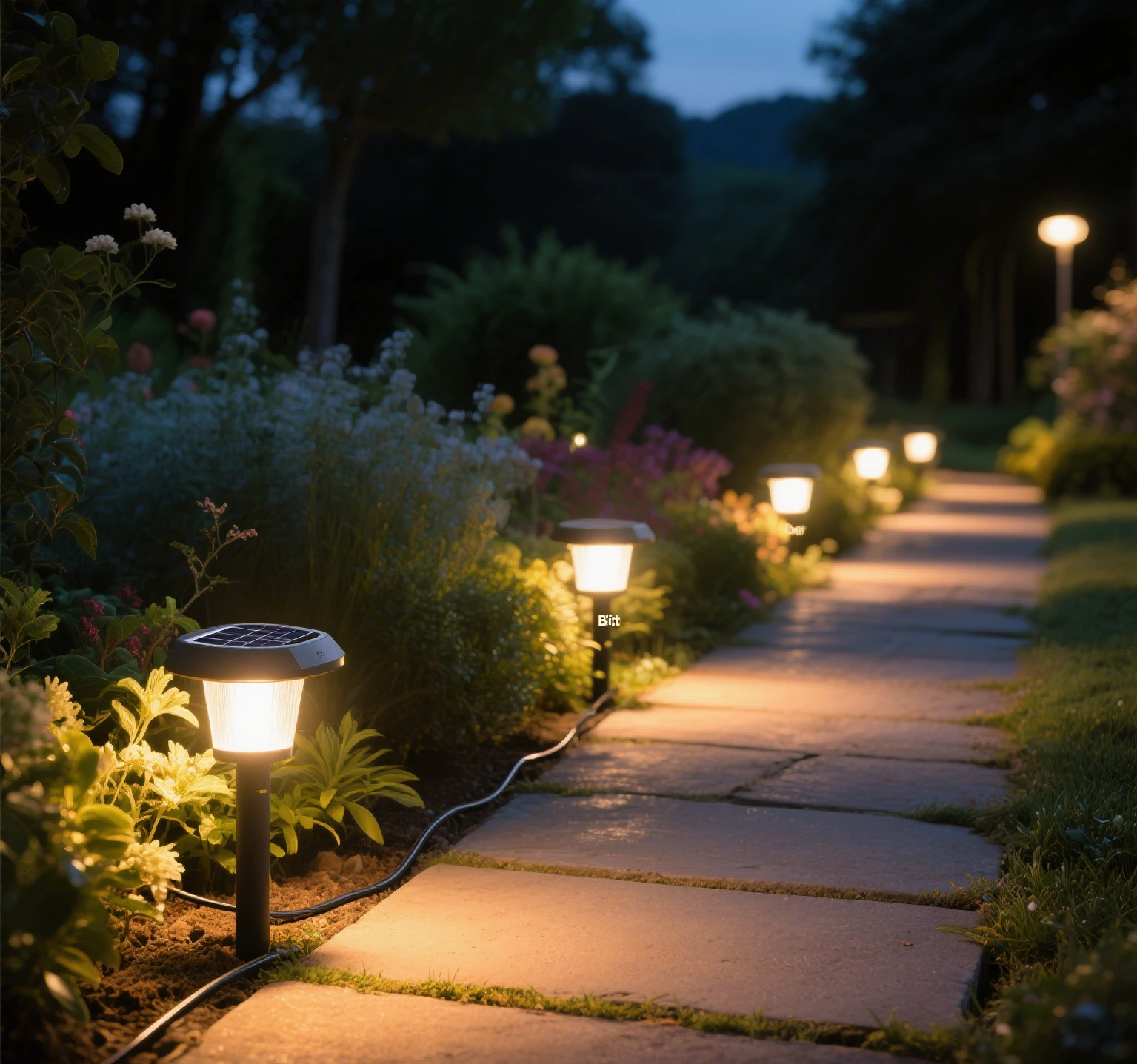
Outdoor solar lights are an eco-friendly and cost-effective way to illuminate gardens, pathways, patios, and driveways, enhancing both aesthetics and safety. With so many options available, knowing how to choose outdoor solar lights can feel overwhelming. This guide provides a detailed roadmap to selecting the best solar lights for your needs, with a focus on high lumens solar path lights and highest lumens solar lights. We’ll cover key factors, innovative tips, and practical advice to ensure your outdoor lighting shines brightly and lasts for years.

Understanding the Basics of Outdoor Solar Lights
Solar lights harness sunlight through photovoltaic (PV) panels, converting it into electricity stored in rechargeable batteries to power LED lights at night. They’re ideal for areas without easy access to electrical outlets, offering sustainability and low maintenance. Whether you’re lighting a garden path with high lumens solar path lights or securing a property with highest lumens solar lights, understanding their components—solar panel, battery, LED, and housing—helps you make informed choices.
Key Factors to Consider When Choosing Outdoor Solar Lights
Purpose and Lighting Needs
The first step in how to choose outdoor solar lights is defining their purpose. Are you aiming for decorative ambiance, pathway navigation, or security? For subtle garden accents, high lumens solar path lights with 10-50 lumens create a warm glow around flower beds or fountains. For walkways, 50-200 lumens ensure safe navigation, while highest lumens solar lights (800-2000 lumens) are best for security, illuminating large areas like driveways or backyards.
Lumen Output and Brightness
Lumens measure light output, and the right count depends on your application. For high lumens solar path lights, 100-300 lumens are ideal for pathways, providing clear visibility without glare. For security or large spaces, highest lumens solar lights with 1000+ lumens offer broad coverage. Consider adjustable brightness settings for versatility, allowing you to switch between low and high modes as needed.
Solar Panel Quality and Efficiency
The solar panel’s efficiency determines how well the light charges. Monocrystalline panels, known for higher efficiency, are ideal for high lumens solar path lights in cloudy regions like the Pacific Northwest. Polycrystalline panels are more affordable but less efficient in low light. Larger panels (e.g., 2-5 watts) support highest lumens solar lights, ensuring sufficient energy for bright, long-lasting illumination.
Battery Capacity and Type
Battery capacity affects runtime. Look for high lumens solar path lights with NiMH or lithium-ion batteries (1000-2200mAh) for 8-12 hours of light after a full charge. For highest lumens solar lights, higher-capacity batteries (3000mAh+) are crucial to sustain bright output. Check if batteries are replaceable to extend the light’s lifespan.
Durability and Weather Resistance
Outdoor lights face rain, snow, and heat, so choose models with an IP65 or higher waterproof rating. High lumens solar path lights with tempered glass panels or stainless steel housings withstand harsh conditions, like coastal salt air. Highest lumens solar lights for security should have robust casings to endure extreme weather, ensuring reliability in places like Minnesota winters.
Design and Aesthetics
Solar lights should complement your outdoor space. High lumens solar path lights come in styles like lantern, stake, or bollard, blending with garden themes. For modern landscapes, sleek highest lumens solar lights with minimalist designs enhance curb appeal. Consider color temperature—warm white (2700-3000K) for ambiance, cool white (5000-6500K) for security.
Advanced Features to Enhance Functionality
Modern solar lights offer features that boost performance and convenience:
Motion Sensors
Highest lumens solar lights with motion sensors conserve battery life by activating high brightness only when movement is detected. This is ideal for security lighting in driveways or entryways, providing 1000+ lumens when needed and dimming to save energy.
Adjustable Settings
Some high lumens solar path lights allow you to adjust brightness or light duration, offering flexibility for different scenarios. For example, you can set low lumens for daily use and switch to high for events, maximizing efficiency.
Dual Charging Options
Brands like Bitpott offer high lumens solar path lights with USB charging ports, allowing indoor charging during cloudy days. This is a game-changer for regions with limited sunlight, ensuring consistent performance.
Smart Integration
Advanced highest lumens solar lights may integrate with smart home systems, allowing remote control via apps or voice assistants. This is useful for scheduling or adjusting lights in large properties.
Placement and Installation Tips
Proper placement maximizes the performance of high lumens solar path lights and highest lumens solar lights:
- Sunlight Exposure: Position lights in areas with direct sunlight, ideally south-facing (in the Northern Hemisphere). Avoid shade from trees or buildings to ensure efficient charging.
- Spacing: For high lumens solar path lights, space them 6-10 feet apart for even illumination along walkways. For highest lumens solar lights, place them higher (e.g., on poles) to cover larger areas.
- Angle Adjustment: Tilt solar panels to capture peak sunlight (30-45° angle in most regions). Some highest lumens solar lights have adjustable panels for optimal positioning.
Maintenance for Long-Lasting Performance
Regular maintenance ensures your solar lights remain effective:
- Clean Panels: Wipe solar panels every 2-3 months with a soft cloth and distilled water to remove dirt or debris, especially for high lumens solar path lights in dusty areas.
- Check Batteries: Test battery health annually with a multimeter. Replace NiMH batteries every 1-2 years to maintain performance in highest lumens solar lights.
- Inspect Seals: Ensure waterproof seals are intact, particularly for high lumens solar path lights in rainy climates, to prevent moisture damage.
Unique Strategies for Choosing Solar Lights
To stand out, here are innovative tips not commonly found elsewhere:
DIY Brightness Testing
Before purchasing, test a sample high lumens solar path light in your space. Place it in the intended location for a day and observe its brightness at night. This helps confirm if the lumen output suits your needs, especially for highest lumens solar lights used for security.

Seasonal Rotation Plan
In regions with seasonal sunlight changes, like northern Europe, rotate high lumens solar path lights to sunnier spots in winter or use USB-charging models during low-light months. This ensures consistent performance year-round.
Reflective Enhancements
Boost the effect of high lumens solar path lights by placing reflective materials, like white gravel or mirrors, around them. This amplifies light output, making pathways appear brighter without increasing lumens.
Hybrid Solar Solutions
For highest lumens solar lights, consider hybrid systems that combine solar with low-voltage wiring for backup power. This is ideal for critical security lighting in areas with frequent cloud cover.
Comparing Popular Solar Light Options
To help with how to choose outdoor solar lights, here’s a comparison of common types:
- Decorative Stakes (10-50 lumens): Perfect for garden accents. Affordable and easy to install, but limited brightness.
- Pathway Lights (50-300 lumens): High lumens solar path lights like those from Bitpott offer reliable illumination for walkways, with stylish designs.
- Flood and Security Lights (800-2000 lumens): Highest lumens solar lights provide powerful illumination for large areas, often with motion sensors for efficiency.
Environmental and Regional Considerations
Solar lights are eco-friendly, reducing carbon footprints. However, their performance varies by region. In sunny areas like Arizona, high lumens solar path lights charge efficiently, while in cloudy regions like the UK, highest lumens solar lights with larger panels and batteries are better suited. Choose durable models to minimize replacements, supporting sustainability.
When to Upgrade or Replace Solar Lights
If your high lumens solar path lights or highest lumens solar lights dim, flicker, or fail to charge, consider upgrading. Look for signs like reduced runtime or damaged panels. Opt for models with warranties (1-2 years) and advanced features like dual charging for long-term reliability.
Conclusion
Knowing how to choose outdoor solar lights involves balancing lumen output, solar panel efficiency, battery capacity, and durability with your specific needs. Whether you’re illuminating a pathway with high lumens solar path lights or securing a property with highest lumens solar lights, careful selection and maintenance ensure optimal performance. By considering purpose, placement, and innovative strategies, you can create a beautifully lit outdoor space that’s both functional and sustainable.
Leave a Reply