


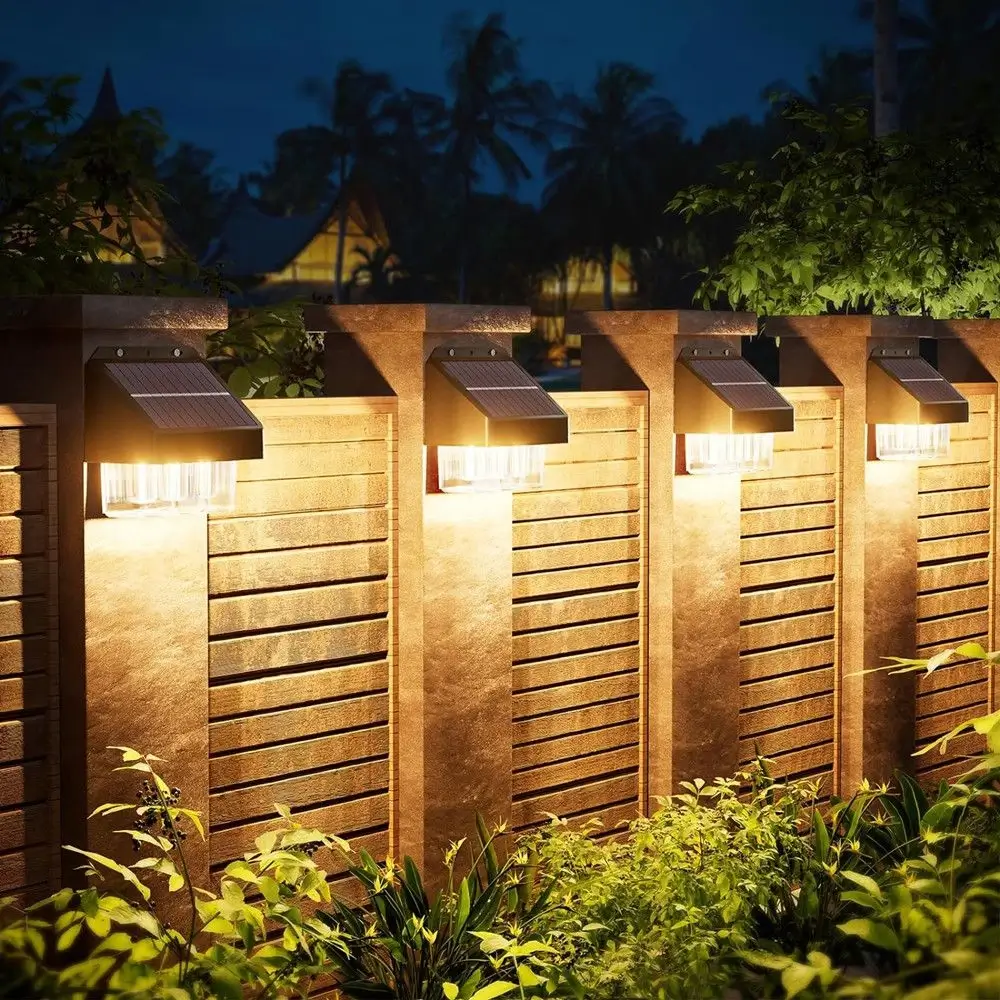
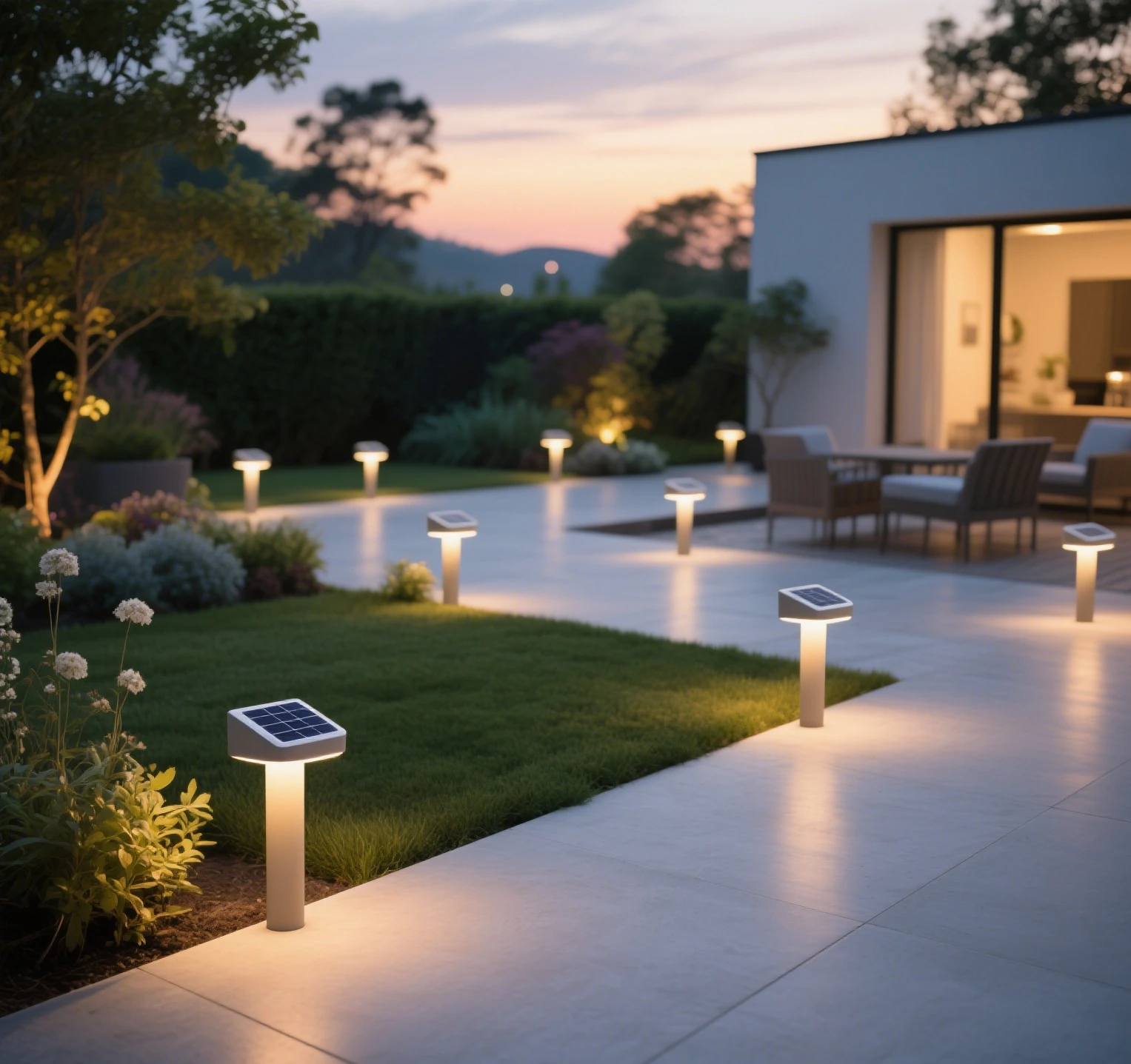
Outdoor lighting enhances safety, security, and ambiance, but traditional wired lights often pose challenges. Homeowners face complex installations, high electricity costs, and maintenance hassles. Solar lights with movement sensors address these pain points by offering wire-free setups, eco-friendly operation, and automated functionality. Unlike wired lights, which require costly electrician services and trenching for cables, solar lights harness sunlight, eliminating wiring complexities. They activate only when needed, reducing energy waste. This article explores how solar lights with movement sensors solve these issues, drawing from user needs and insights from sources like Better Homes & Gardens and The Spruce.
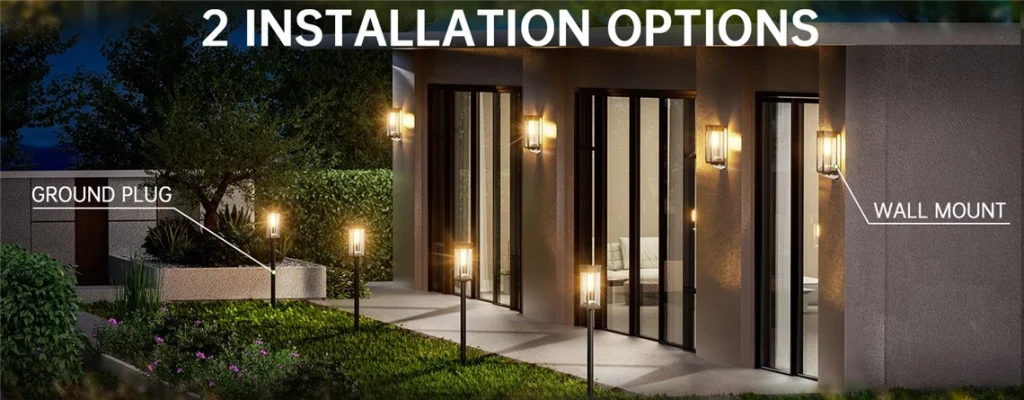
Advantages of Solar-Powered Outdoor Wall Lights
Compared to Ordinary Lighting: How Much Can Electricity Be Saved? What’s the Installation Cost Difference?
Solar lights with movement sensors save significant electricity compared to traditional outdoor lights. Standard wired lights, often halogen or incandescent, consume 50-100 watts per hour. In contrast, solar LED lights, like the AloftSun Motion Sensor Solar Landscape Spotlights, use 5-15 watts, cutting energy use by up to 90%. Assuming 5 hours of nightly use, a 100-watt wired light costs about $36 annually at $0.12 per kWh, while a 10-watt solar light costs $0, as it relies on sunlight.
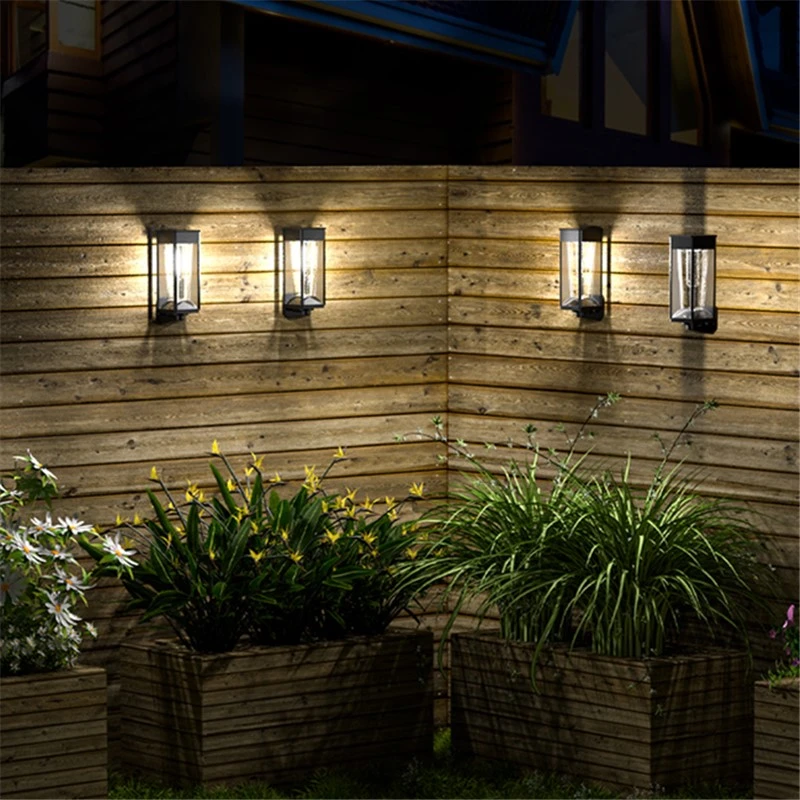
Installation costs also favor solar lights. Wired lights require professional installation, averaging $200-$500 per fixture for labor and materials. Solar lights, such as the Cyhkee Motion Sensor Solar Powered Wall Lanterns, need only screws and a drill, with setup taking 5-10 minutes and costing $0 in labor for DIY enthusiasts. The Better Homes & Gardens review notes that their tested solar light required just two screws and a bracket, making it accessible for non-experts.
Rainy Day Battery Life: How Does It Perform in Real-World Use?
Battery performance on cloudy or rainy days is a common concern. Modern solar lights with movement sensors, like the Ameritop Outdoor Mounting Solar Lights, feature advanced lithium-ion batteries and efficient solar panels. These lights charge in 6-8 hours of sunlight, providing 8-12 hours of illumination. The Spruce’s testing of the AloftSun model showed reliable performance even after cloudy days, with three modes (dim, high, or always-on) ensuring flexibility. On rainy days, high-efficiency panels, like those in the Lutec Curtis PIR Outdoor LED Solar Wall Light, maintain 80-90% charge capacity, delivering 6-10 hours of light. Real-world tests by The Spruce confirm durability through rain and snow, though some panels develop a white film over time, which doesn’t impact function.
No More Confusion for Choosing for Different Scenarios
Balcony: The Difference Between Styles Focusing on Soft Lighting and Practical Lighting
Balconies require lighting that balances aesthetics and utility. For soft, ambient lighting, solar lights with movement sensors like the Alcott Hill Rasberry Wall Light offer a vintage, decorative glow at 120 lumens, ideal for cozy evenings. These lights lack motion sensors but provide consistent dusk-to-dawn illumination, enhancing ambiance without overpowering. For practical lighting, the Urpower Solar Lights, with 40 LEDs and a 120-degree detection angle, deliver 800 lumens for safety and visibility. Their motion-activated mode suits balconies used for late-night activities, activating only when needed to conserve energy. Choose soft lighting for decorative appeal and practical lighting for functional spaces like dining areas.
Porch: Tips for Selecting Sensor Sensitivity for Anti-theft Needs
Porches demand solar lights with movement sensors for security. High sensitivity is key for anti-theft purposes, detecting motion up to 26 feet, as seen in the Ameritop model. Lights like the Maxsa Motion-Activated Dual Head Solar Security Light allow adjustable sensitivity, letting users set detection ranges from 10 to 26 feet and illumination durations from 10 seconds to 4 minutes. For optimal security, position sensors toward entry points, as advised by SimpliSafe’s Hooman Shahidi. The Cyhkee model offers three modes: motion-only, dim-to-bright, or constant half-brightness, providing flexibility for porch needs. Ensure the sensor covers a 120-degree angle and test sensitivity to avoid false triggers from pets or wind.
Garden Corners: How to Avoid Reduced Battery Life Due to Insufficient Lighting
Garden corners often face shading from trees or structures, reducing solar panel efficiency. To avoid battery life issues, select solar lights with movement sensors featuring adjustable panels, like the AloftSun model, which pivots 90 degrees vertically and 180 degrees horizontally to capture maximum sunlight. Place lights in areas receiving 6-8 hours of direct sunlight daily. The Better Homes & Gardens review highlights a light with three rechargeable panels, ensuring a full charge even in partially shaded spots. Opt for lights with IP65 or IP67 weather-resistance ratings to withstand garden moisture. Regular cleaning of panels prevents dust buildup, maintaining 95% charging efficiency over time.
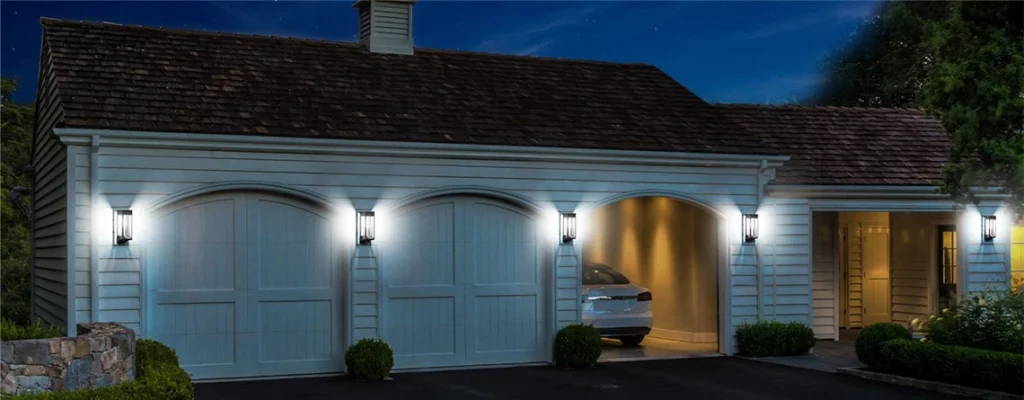
The Key to User Experience
Light Source Angle Adjustment: How to Avoid Direct Eye Lighting
Proper light angle adjustment enhances comfort and functionality. Solar lights with movement sensors, like the AloftSun Spotlights, allow 90-degree vertical and 180-degree horizontal adjustments, directing light downward to illuminate paths without glaring into eyes. Fixed-angle lights, such as some Urpower models, may cause discomfort if mounted too high. The Spruce notes that careful placement ensures beams cover an 8-foot radius without blinding users. Test angles during installation, aiming light 30-45 degrees downward for pathways or porches to balance visibility and comfort.
Material Selection: Compatibility Standards for Rainy/Snowy/Sunny Areas
Material durability is critical for solar lights with movement sensors in diverse climates. Stainless steel and glass, as in the Ameritop lights, offer IP65 waterproofing, resisting rain but requiring protection from high winds. ABS plastic, used in the Cyhkee lanterns, is anti-corrosion, waterproof, and heatproof, ideal for snowy or sunny regions. The Spruce’s durability tests confirm that IP67-rated lights like the AloftSun withstand rain, snow, and sun without damage. Choose lights with UV-resistant coatings for sunny areas to prevent fading. For snowy climates, ensure panels are elevated to avoid snow accumulation.
Mounting Height: 1.5m vs. 2m: What’s the Difference in Illumination Range?
Mounting height impacts illumination range and sensor effectiveness. At 1.5 meters, solar lights with movement sensors like the Urpower provide an 8-foot radius with a 120-degree detection angle, ideal for narrow paths or small porches. At 2 meters, the range extends to 10-12 feet, as seen in the Maxsa Dual Head light, suiting larger areas like driveways. Higher mounting increases coverage but may reduce sensor sensitivity for close-range motion. The Spruce recommends 1.5 meters for precise detection near entryways and 2 meters for broader garden illumination. Test both heights during setup to optimize coverage.
Purchase Summary
Choosing the right solar lights with movement sensors simplifies outdoor lighting. Use this 30-second formula:
- Identify Purpose: Ambiance (decorative, 100-200 lumens) or security (800+ lumens).
- Assess Location: Balcony (soft or practical), porch (high-sensitivity sensor), or garden (adjustable panel).
- Check Specs: IP65/IP67 rating, 6-8 hour charge for 8-12 hour runtime, adjustable angles.
- Budget: $20-$50 for basic models, $100+ for premium designs like Alcott Hill.
Prioritize IP65+ ratings and adjustable features for versatility. With these insights, you can confidently select lights that enhance safety, save energy, and elevate your outdoor space.
Leave a Reply